
By Ben Raabe, CEO — Licensed Contractor | 25+ Years Experience
Detroit’s demolition program began in 2014, not decades earlier — a distinction worth getting right, since the scale of what’s happened since is the actual story. Mayor Mike Duggan’s administration inherited a city facing 45,000 vacant Land Bank-owned homes, funded an initial push with $265 million in federal funds, and has since removed more than 30,000 dangerous structures citywide. This guide covers where the program came from, how it works today, and where it stands as of 2025.
Why Detroit’s Demolition Program Exists
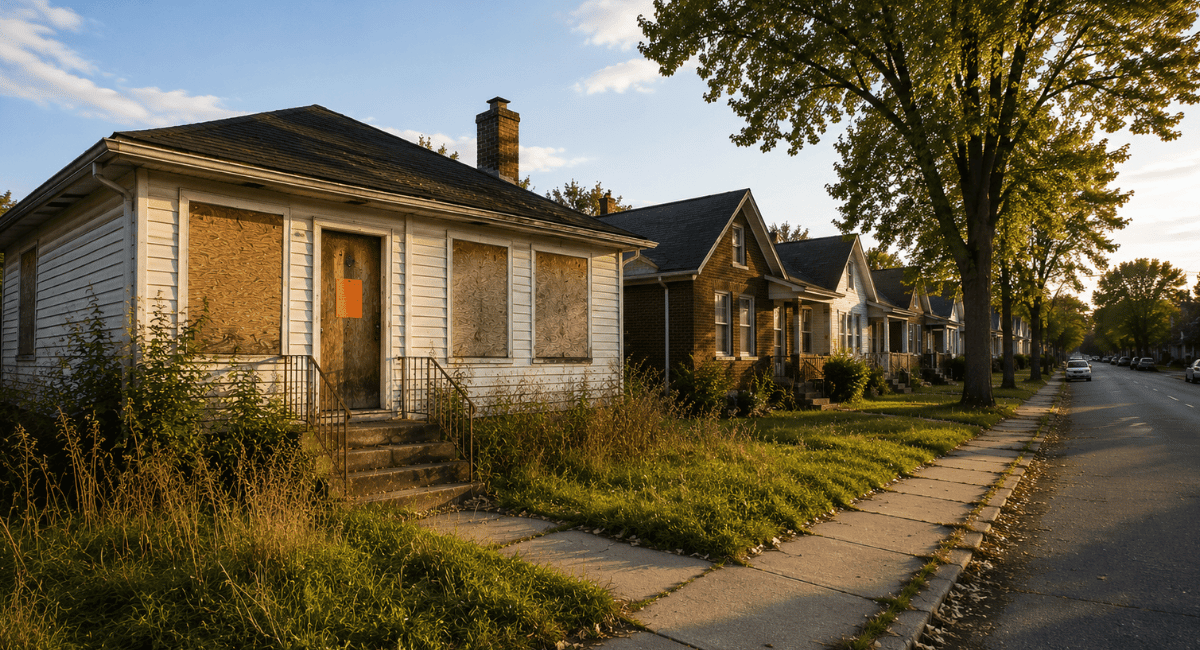
Detroit’s population dropped from roughly 1.8 million at its 1950s peak to under 700,000 today, and decades of that decline left tens of thousands of vacant, deteriorating structures behind. By 2014, the city faced 45,000 vacant Land Bank-owned homes, a scale that made piecemeal demolition impossible and pushed the city toward a coordinated program.
The Detroit Land Bank Authority (DLBA) itself dates to 2008, created at a smaller scale before Mayor Mike Duggan consolidated it with the city’s and county’s separate land bank functions in 2014, folding all three into one agency. That consolidation, paired with $265 million in federal funds, is what turned demolition from a scattered, underfunded effort into the citywide program that exists today.
How the Program Is Funded
Funding for Detroit’s demolition work has come in two major waves. The first, starting in 2014, ran on $265 million in federal funds, money that could only reach the city’s most densely populated neighborhoods under the program’s original terms, which left other areas without a funding path. In November 2020, Detroit voters closed that gap by approving Proposal N: $250 million in Neighborhood Improvement Bonds, split between preserving 8,000 homes and demolishing another 8,000 in the neighborhoods the federal funding hadn’t reached.
How the Demolition Process Works
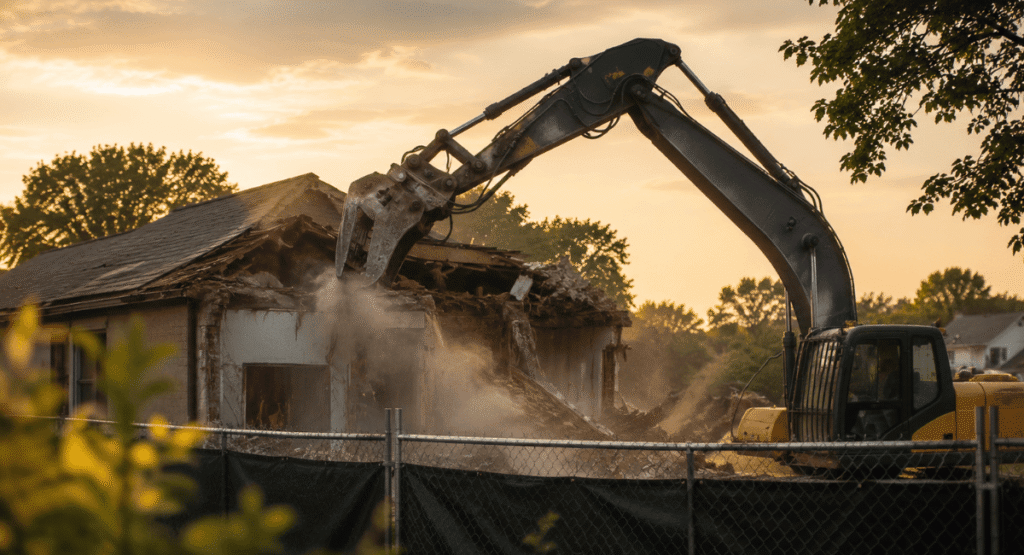
Detroit-based contractors bid competitively for demolition parcels through the city’s Office of Contracting & Procurement, and 30% of Proposal N awards are set aside specifically for Detroit-certified businesses. As with demolition work in most jurisdictions, any structure with lead paint or asbestos requires abatement before teardown, since disturbing either hazard during demolition creates a real health risk to the surrounding block.
Now that the need for demolition in Detroit has been established, it is time to examine the process of actually getting such a program off the ground. In order to ensure safety and compliance with all applicable laws, there are several steps involved when demolishing a property in the city.
First and foremost, any structure which contains lead paint must be professionally abated before any demolition can begin. This is essential as exposure to this hazardous material can cause serious health risks if not properly managed. To supplement these costs, many home owners have taken advantage of federal dollars available through programs like Hardest Hit Fund or Neighborhood Stabilization Program II.
Once abatement is complete, it’s time for actual blight removal which most often takes place via physical destruction by either heavy machinery or explosives depending on the nature of the structure. Several local Detroit companies specialize in such services, making them an ideal partner for demolition projects throughout the area.
Finally once all necessary permits have been obtained and approved it’s simply a matter of executing according to plan until completion ensuring that both safety precautions and environmental standards are met at every stage along the way. It’s only then that we can truly start to see progress being made towards improving our communities one house at a time.
The Program’s Impact
Since 2014, Detroit has removed more than 30,000 dangerous vacant structures citywide, a figure confirmed in the city’s own reporting as of July 2025. As of that same report, fewer than 3,000 of the 45,000 vacant Land Bank homes the city faced in 2014 remained to be sold or demolished. A December 2025 economic impact analysis, conducted by Griswold Consulting Group, attributes more than $2 billion in increased home values across Detroit neighborhoods to the Land Bank’s demolition and rehabilitation activity since 2014, accounting for as much as 40% of the city’s citywide home value growth over the past decade.
Proposal N specifically reached its own original goal in July 2025: the 8,000th residential demolition funded by the 2020 bond program, fulfilling the commitment voters approved. Over that same period, another 12,000 vacant Land Bank homes were sold and successfully renovated rather than demolished.
Where the Program Stands in 2025
Proposal N’s original 8,000-demolition goal was fulfilled in July 2025, and the Detroit Land Bank has removed more than 30,000 residential structures since the program’s 2014 start. The Construction & Demolition Department was reorganized in 2023 to also manage capital projects and public facilities. At the time of that reorganization, the city put the combined budget for demolition, capital, and facilities work at roughly $400 million. For contractors and property owners planning demolition work in Detroit today, that means a more centralized permitting and procurement process than existed even five years ago.
Oversight and Criticism
The program’s scale has drawn real oversight scrutiny, not just informal criticism. Detroit’s Office of Inspector General, working with the Construction & Demolition Department, investigated the quality of fill material used at some demolition sites, a review that expanded to more than 400 sites citywide; a separate Detroit Police Department review flagged additional sites over unclear fill-material documentation. The city has since tightened its vetting process for fill-dirt suppliers going forward.
Proposal N itself has drawn criticism from some activists and city council members, per Axios Detroit reporting, not over execution quality, but over Detroit’s broader, controversial history with demolition as a blight-removal tool, and concern that removing structures alone doesn’t address the underlying causes of home vacancy and eviction in the city.
Frequently Asked Questions
When did Detroit’s demolition program start, and why?
Detroit’s coordinated demolition program began in 2014 under Mayor Mike Duggan, when the city faced 45,000 vacant, Land Bank-owned homes left behind by decades of population decline. The initial phase ran on $265 million in federal funds, which could only reach the city’s most densely populated neighborhoods under the funding’s original terms. Detroit voters later approved Proposal N in November 2020 to extend demolition funding to the neighborhoods the federal money hadn’t reached.
How many homes has Detroit’s demolition program removed?
More than 30,000 dangerous vacant structures have been removed since 2014, according to the City of Detroit’s own July 2025 reporting. As of that report, fewer than 3,000 of the 45,000 vacant Land Bank homes the city faced in 2014 remained to be sold or demolished. A December 2025 economic impact analysis attributes more than $2 billion in increased home values across Detroit neighborhoods to this demolition and rehabilitation activity.
What is Proposal N, and has it reached its goal?
Proposal N is the $250 million bond program Detroit voters approved in November 2020 to preserve 8,000 homes and demolish another 8,000 blighted structures in neighborhoods that hadn’t received earlier federal demolition funding. The program reached its original 8,000-demolition goal in July 2025, fulfilling the commitment made to voters when the bond was approved.
Who oversees the quality of Detroit’s demolition work?
The City of Detroit’s Office of Inspector General and Construction & Demolition Department have investigated the quality of fill material used at some demolition sites, expanding environmental testing to more than 400 sites citywide and tightening supplier vetting procedures as a result. Reputable demolition contractors typically follow comparable site-restoration and testing standards on projects of this scale. GET A FREE ESTIMATE to discuss a Detroit demolition project with Bella’s team.
Has Detroit’s demolition program faced criticism?
Yes. Reporting from Axios Detroit notes that Proposal N has drawn criticism from some activists and city council members, not over execution quality, but over Detroit’s broader, controversial history with demolition as a blight-removal strategy, and concern that removing structures alone doesn’t resolve the underlying causes of home vacancy and eviction in the city.
Conclusion
Detroit’s demolition program has removed more than 30,000 vacant, dangerous structures since 2014, first under federal funding, now under the voter-approved Proposal N bond, which reached its original goal in 2025. For contractors and property owners working in Detroit today, that history matters less than the current process: permitting and procurement coordinated through the Construction & Demolition Department, asbestos and lead abatement requirements, and a competitive bid process that keeps qualified, Detroit-certified contractors doing the work. Bella Contracting Services handles commercial and industrial demolition throughout Detroit under this same framework.