24/7 EMERGENCY SERVICE
By Ben Raabe, CEO — Licensed Contractor | 25+ Years Experience
Selective demolition is the controlled removal of specific parts of a building, such as walls, floors, ceilings, structural members, or building systems, while the rest of the structure stays standing. Bella Contracting Services performs selective demolition for commercial, industrial, and government projects nationwide, working with property owners, general contractors, and developers. Hazardous material abatement is handled before selective work begins, and OSHA requires an engineering survey before any demolition starts. Call (855) 368-3366 or request a free estimate to get your scope reviewed.
Get a Free Garage Demolition Estimate
Licensed, insured, and available 24/7. Response within 24 hours guaranteed.
By submitting this form, you consent to be contacted by Bella Demolition and Contracting Services via phone, email, or text regarding your project inquiry. We respect your privacy and will never share your information.
View our Privacy Policy.
A selective demolition scope is a written list of what comes out and what stays. Everything on the remove list is taken out in a planned sequence, and everything on the remain list is protected for the life of the job. That separates selective work from a full teardown, because the building keeps standing and often keeps operating around the work area. It is one of four scopes within Bella’s commercial demolition work, alongside complete, structural, and industrial demolition.
Owners choose selective demolition for renovations, tenant improvements, floor plan changes, and upgrades that need new openings, new systems, or cleared space without a teardown. Planning around the remain list first is what separates a clean selective job from an expensive repair. For work limited to a building’s interior, see our interior demolition service.
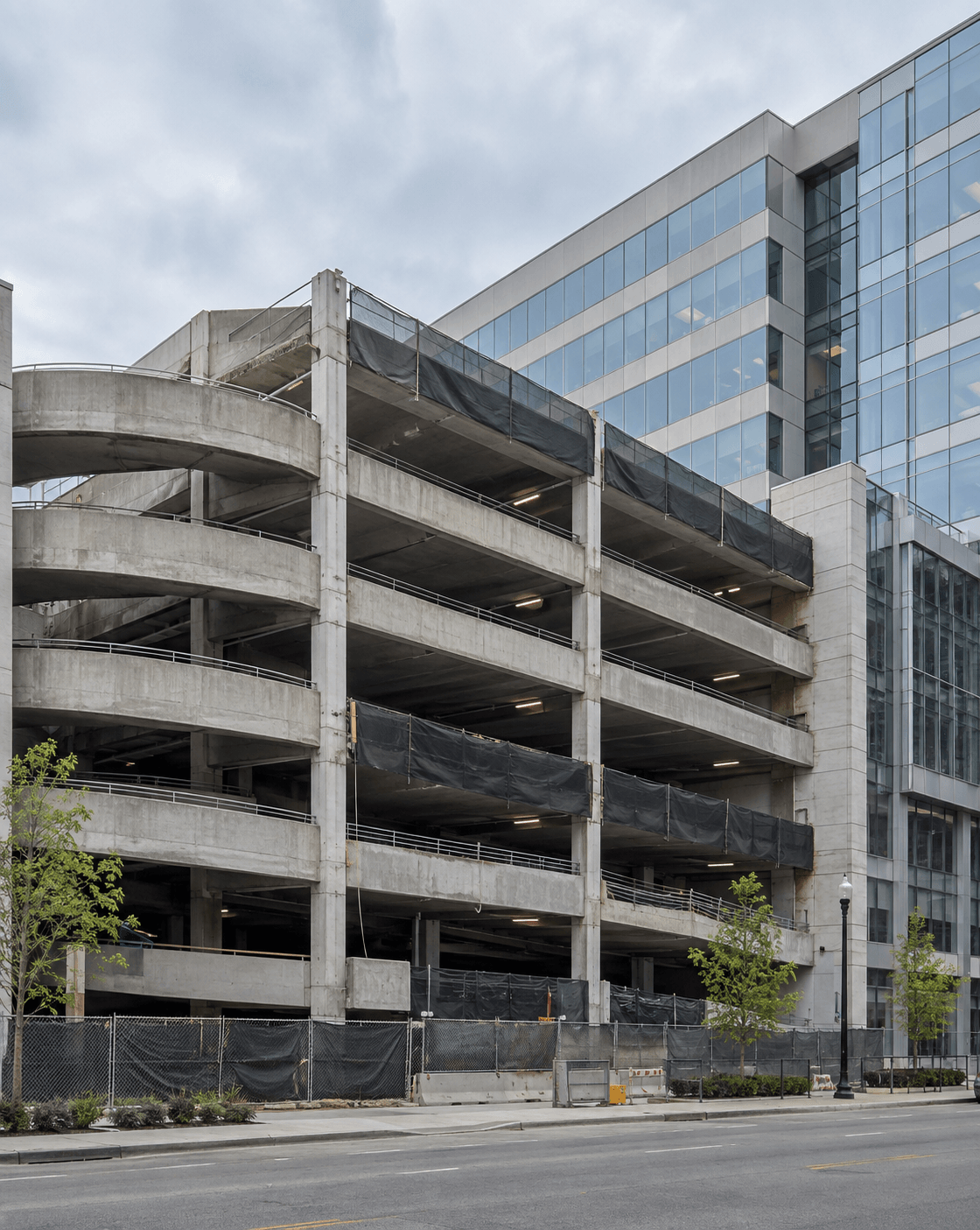
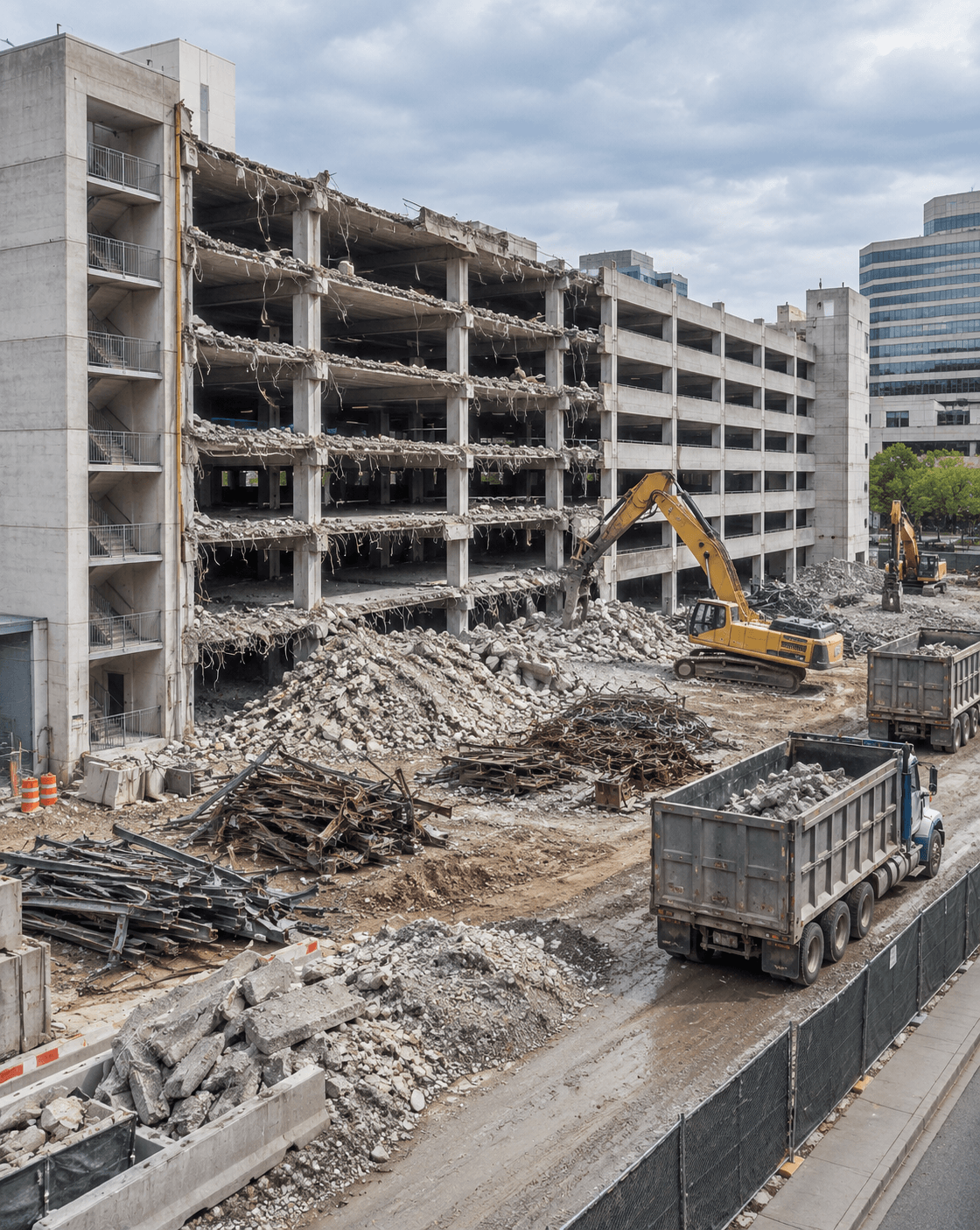
Parking garage demolition cost is driven by scope, access, and risk, not a published square-foot rate. Bella does not publish $/sf figures because every garage differs in levels, concrete volume, post-tensioning, steel content, adjacency, and haul distance. Budget from a site-specific walkthrough and engineered plan, not a generic online multiplier.
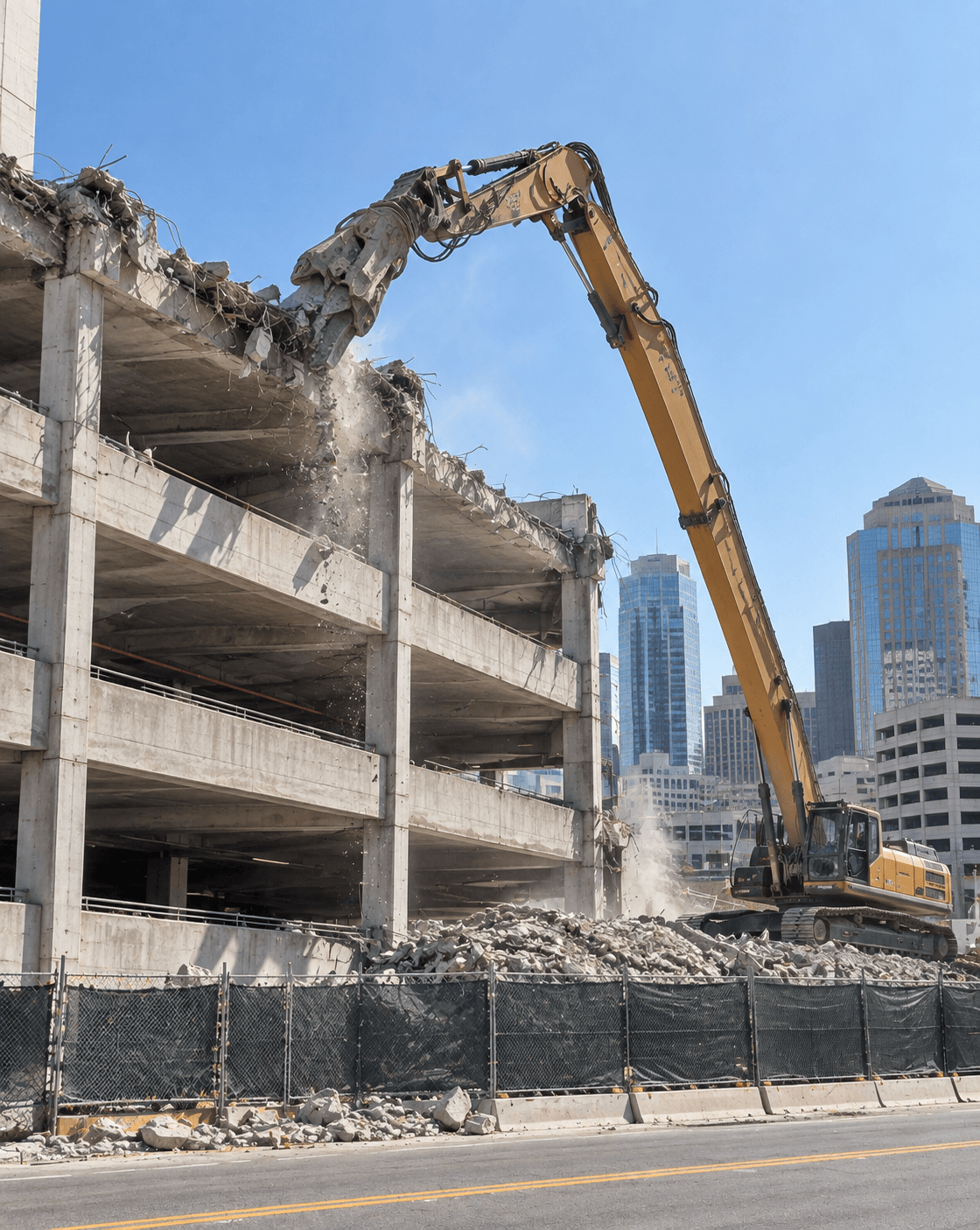
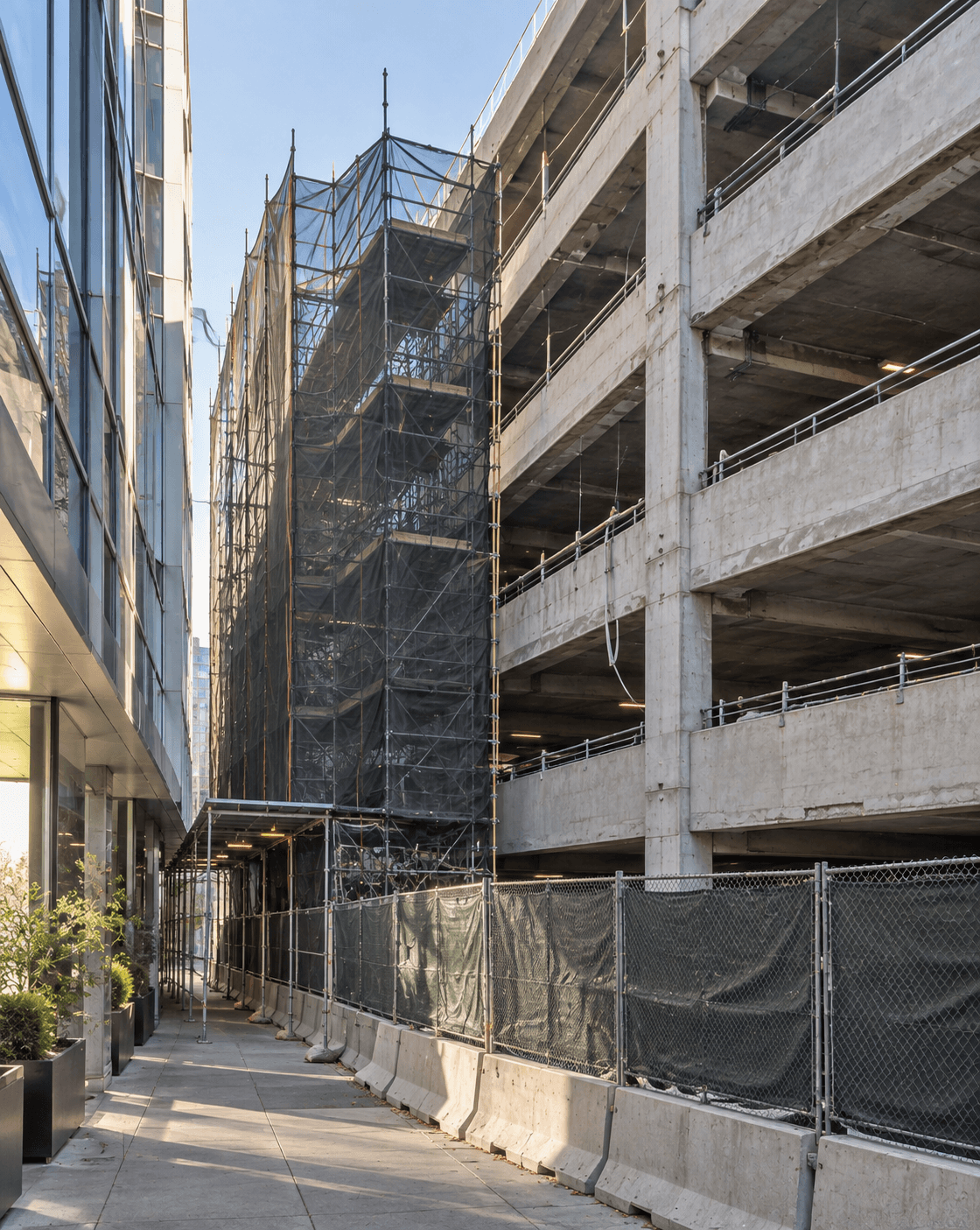
Primary drivers include: number of levels and deck area; cast-in-place, precast, or post-tensioned concrete; steel and embedded utilities; proximity to occupied buildings or shared podium slabs; access for high-reach equipment and trucks; hazmat findings that require abatement before structural work; concrete and metal recycling or disposal; and post-demo grading for redevelopment. Night work, traffic control, and GC schedule compression can also move price. Surface parking lot demolition cost is a different, usually lighter job; multi-level structure pricing isn’t interchangeable with asphalt-lot removal.
Post-tensioned decks deserve special attention in any cost conversation: sequencing and temporary support change both risk and duration versus ordinary reinforced slabs. Podium garages under occupied towers add protection, phasing, and often after-hours work that surface-lot bids never carry. Owners comparing multiple bids should confirm whether the bidder priced PT release, adjacent monitoring, and rebuild-ready pad drop, or only open-yard removal.
Federal rules put inspection ahead of removal. OSHA’s demolition standard, 29 CFR 1926.850(a), requires a competent person to complete an engineering survey of the structure before workers start demolition operations, and the employer must keep written evidence that the survey was performed. The survey assesses the condition of the framing, floors, and walls and the possibility of unplanned collapse.
Asbestos comes next. EPA’s asbestos NESHAP rule, 40 CFR 61.145(a), requires the owner or operator to thoroughly inspect the affected part of a facility for asbestos before demolition or renovation begins, including Category I and Category II nonfriable material. Any asbestos, lead paint, or mold abatement is completed before selective removal starts, which protects crews and occupants in adjacent spaces. For the methods involved, read our guide to asbestos control methods during demolition.
Dust and noise controls are planned alongside the removal sequence so occupied areas stay usable. See controlling noise and dust for the practices that apply.
Bella manages permits, hazardous material abatement, site remediation, and cleanup on commercial projects. A typical selective project follows five steps.
Material handling is planned from the start. See reusing demolition site materials for how salvage and recycling are scoped, and mechanical demolition for the equipment-driven methods used on larger removals.
Selective demolition fits any project where part of a building must change and the rest must stay. Bella performs this work for the following project types:
Selective scopes are typically priced from the drawings and a site walkthrough. For owners who also need the rebuild, Bella offers general contracting services and commercial construction in select markets after the demolition is complete.
Bella Contracting Services has 25+ years in business and is family owned and owner operated. Commercial property owners, general contractors, and public agencies hire Bella for demolition across commercial, industrial, and government projects. Ben Raabe, CEO, leads the company, and crews are available 24/7. Selective work rewards that experience, because the cost of a mistake is damage to the part of the building that was meant to stay.
To discuss a project, call (855) 368-3366 or use the button below.
Selective demolition sits within Bella’s full range of demolition services for commercial and industrial clients. For a plain-language overview of the field, read about the three general methods of demolition.
A selective demolition scope of work should state what is to be removed, what must remain, how remaining construction is protected, and what happens to removed materials. It should also identify hazardous material conditions, utility shutoff requirements, work hours, and access limits. Marking removal and remain items on the drawings and again on site guards against taking out something that was meant to stay. Scopes that leave any of these points open tend to produce change orders once crews start work.
A competent person must complete an engineering survey of the structure before workers begin demolition operations. This requirement comes from OSHA’s demolition standard, 29 CFR 1926.850(a), and the employer must keep written evidence that the survey was performed. The survey evaluates the condition of the framing, floors, and walls and the possibility of unplanned collapse. On selective projects, the findings also guide shoring, bracing, and the order in which structural members come out.
It does whenever the work removes a load-supporting structural member. EPA’s asbestos NESHAP rule, 40 CFR Part 61 Subpart M, classifies that as demolition, and a demolition generally requires written notification at least 10 working days before work begins, even when no asbestos is present. Selective work that leaves every load-supporting member in place is a renovation, which triggers notification and the rule’s other requirements once the regulated asbestos-containing material disturbed reaches 260 linear feet on pipes, 160 square feet on other facility components, or 35 cubic feet off facility components where length or area could not be measured. Either way, the owner or operator must inspect for asbestos first, and local agencies may add requirements.
The remaining structure is protected through a planned removal sequence, temporary shoring or bracing where loads shift, and physical barriers around finishes and systems that stay. Contractors choose hand tools, small equipment, or mechanical methods based on how close the work sits to the remain items. Dust and noise controls limit the effect on adjacent spaces. The engineering survey and the marked remain list set the method, so a protection plan is part of the scope before any removal starts.
Removed material is sorted into salvage, recyclable, and disposal streams as the scope directs. Metals, concrete, masonry, and clean wood commonly go to recycling, while hazardous materials are handled separately under applicable regulations. Owners who want fixtures, equipment, or architectural items kept must say so in the scope before work begins, because salvage items are removed more carefully than debris. Debris is hauled off site and the work area is cleaned for the next trade.
A selective demolition bid request should include drawings with removal and remain items marked, any asbestos or hazardous material survey reports, the engineering survey if it has been completed, site access and work hour limits, and the target schedule. Photos of existing conditions also help. With those items, a contractor can price the work accurately and flag conflicts before mobilizing. To send a project for review, call (855) 368-3366 or select GET A FREE ESTIMATE.