14-24 Abbott Rd

#413, Fair Lawn, NJ 07410

Industrial Demolition Services for Plants and Manufacturing Facilities

By Ben Raabe, CEO — Licensed Contractor | 25+ Years Experience

Industrial demolition is the planned dismantling and removal of plants, factories, mills, warehouses, and the process equipment inside them. Bella Contracting Services performs industrial demolition for facility owners, general contractors, and developers nationwide, from single structures to full plant closures. Hazardous materials are surveyed and abated before any structure comes down, and federal rules require an engineering survey and control of utility lines before demolition starts. Bella manages permits, abatement coordination, demolition, and cleanup under one contract, and can rebuild on the cleared site. Call (855) 368-3366 or request a free estimate to have your scope reviewed.

Tell Us About Your Project

Fully insured. We respond to every estimate request within 24 hours.

New Website Lead


By submitting this form, you consent to be contacted by Bella Demolition and Contracting Services via phone, email, or text regarding your project inquiry. We respect your privacy and will never share your information.
View our Privacy Policy.

What Industrial Demolition Covers, From One Structure to a Full Plant Closure

Industrial demolition covers the removal of buildings, structural steel, foundations, and process equipment at sites built for manufacturing, storage, or energy production. A scope can be as small as one obsolete building on an operating campus or as large as a multi-building plant closure that ends with a cleared, graded site. Industrial work differs from other demolition because the structures hold more than walls and floors. Tanks, piping, conveyors, cranes, pits, and heavy foundations all have to be emptied, isolated, and removed in a planned order.

Most industrial projects fall into one of three scopes. Total demolition removes every structure and foundation so the site can be sold or redeveloped. Partial demolition takes down selected buildings or production lines while the rest of the facility keeps running. Interior strip-out removes equipment and building systems and leaves the shell for a new use. Work that keeps most of a structure standing is planned the same way as other selective demolition scopes.

Industrial Facilities and Structures Bella Demolishes

Bella Contracting Services demolishes industrial facilities for plant decommissioning, facility relocation, and site remediation projects. Most projects involve one or more of the following.

Manufacturing plants and factories

Production buildings combine steel framing, heavy slabs, machine foundations, and overhead cranes. Equipment is disconnected and removed first, and the structure follows once the building is empty.

Warehouses and distribution centers

Warehouses are large, open steel or concrete structures with racking, loading docks, and thick floor slabs. The slab and foundations are often the largest part of the removal.

Power, chemical, and process plants

Power, chemical, and process plants need the most preparation, because vessels, piping, and storage tanks must be cleaned and cleared before demolition. Bella handles these facilities as heavy demolition projects, which include power plant and chemical plant decommissioning.

Mills, stacks, and water towers

Pulp and paper mills, smoke stacks, and water towers are tall or sprawling structures that come down in phases. Where explosive methods are restricted, stacks are dismantled mechanically from the top down, and Bella offers dedicated smoke stack demolition for those structures.

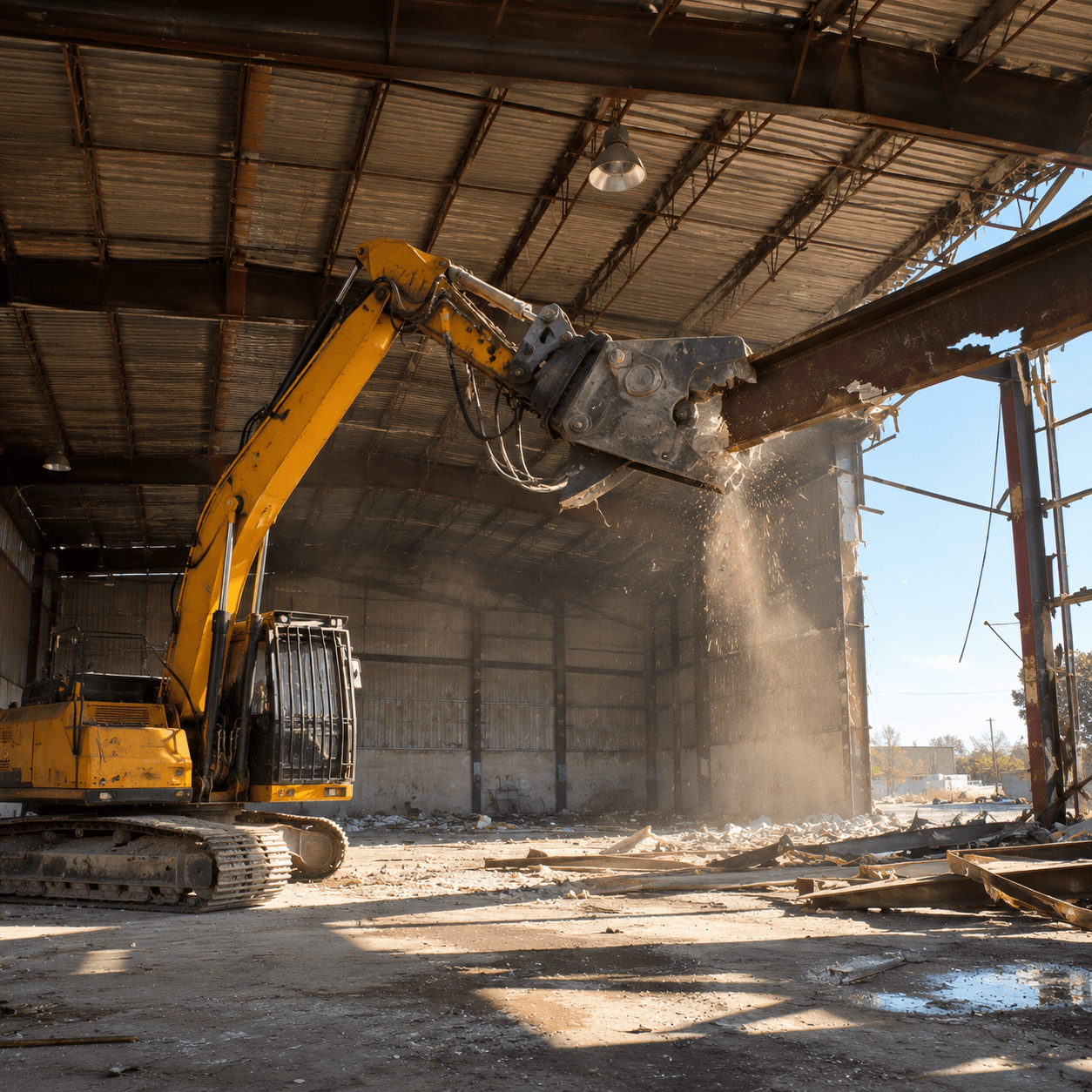
Excavator with a shear attachment cutting structural steel beams inside a warehouse under demolition.
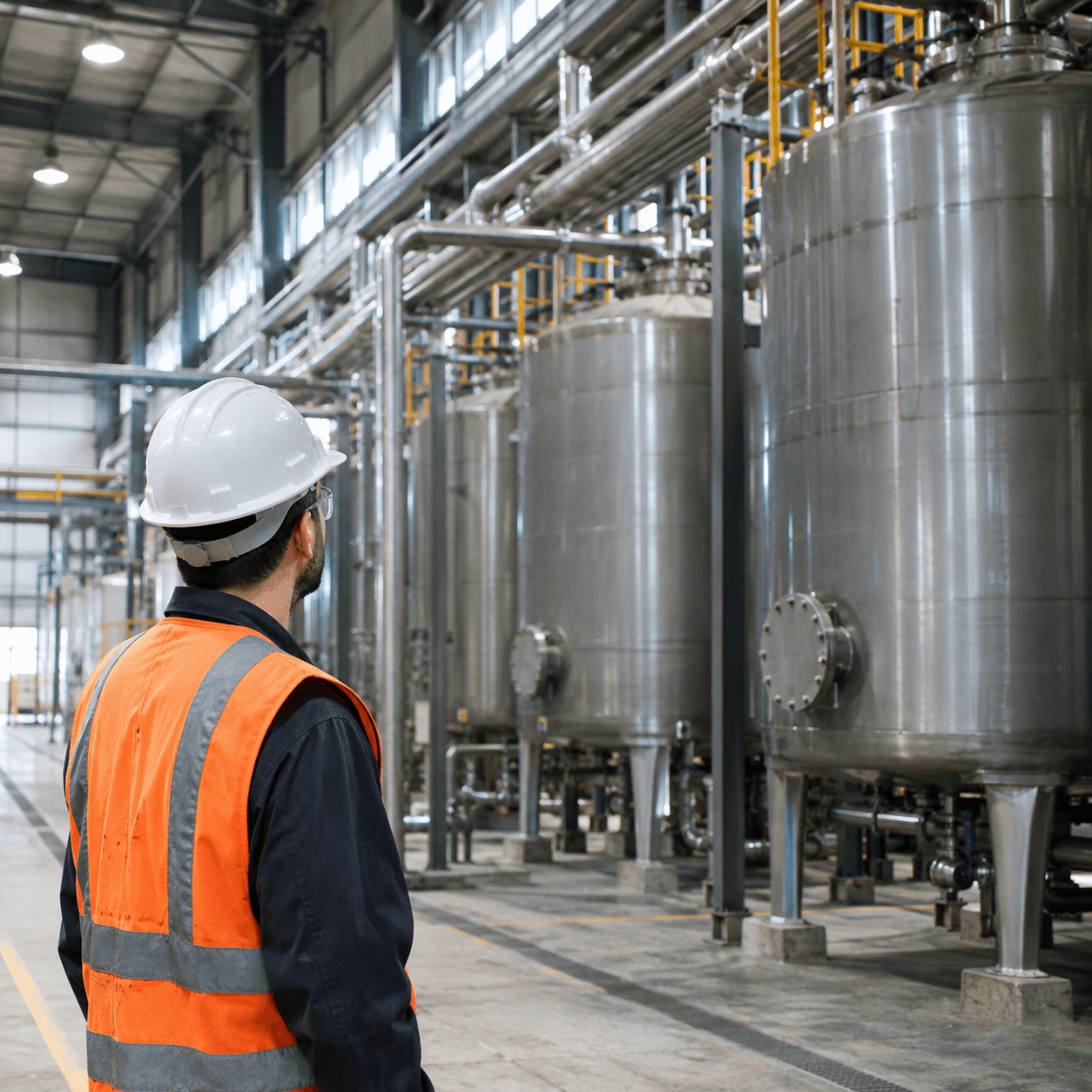
Inspector in a hard hat and high-visibility vest checking a storage tank and piping before plant demolition.

Federal Requirements That Come Before Industrial Demolition Starts

Federal rules set the order of work on an industrial site, and the first steps must be complete before demolition work begins. OSHA’s demolition standard, 29 CFR 1926.850, requires a competent person to complete an engineering survey of the structure before demolition starts, and the employer must keep written evidence that the survey was done. The same standard requires electric, gas, water, steam, and sewer lines to be shut off, capped, or otherwise controlled outside the building line before work begins.

Industrial sites bring a further requirement into play. Under paragraph (e) of the OSHA standard, it must be determined whether hazardous chemicals, gases, explosives, or flammable materials were used in any pipes, tanks, or other equipment on the property. Where those substances are apparent or suspected, testing and purging must be performed and the hazard eliminated before demolition starts.

Asbestos is handled under a separate rule. EPA’s asbestos regulation, 40 CFR 61.145, requires the owner or operator to thoroughly inspect the facility for asbestos before demolition, and it generally requires written notice at least 10 working days before a demolition begins, even when no asbestos is found. State and local agencies can add permits, notices, and disposal rules on top of the federal requirements.

How an Industrial Demolition Project Runs, From Site Assessment to Cleared Site

Bella manages permits, hazardous material abatement, site remediation, and cleanup from a single point of accountability. A typical industrial demolition project follows five steps.

  1. Site assessment. The structures, equipment, utilities, and environmental hazards are assessed before the scope is final.
  2. Surveys and planning. The engineering survey and asbestos inspection are completed, the demolition method is selected, and permits are obtained.
  3. Abatement, purging, and utility isolation. Hazardous materials are abated, tanks and lines are tested and purged, and utilities are shut off or relocated.
  4. Equipment removal and demolition. Process equipment comes out first, and structures are then taken down in a planned sequence that keeps the remaining framing stable.
  5. Material processing and cleanup. Steel and concrete are sorted for recycling, debris is hauled off, and the site is graded for its next use.

Order matters on an industrial site, because a step done out of sequence can release a hazard or leave a structure unsupported.

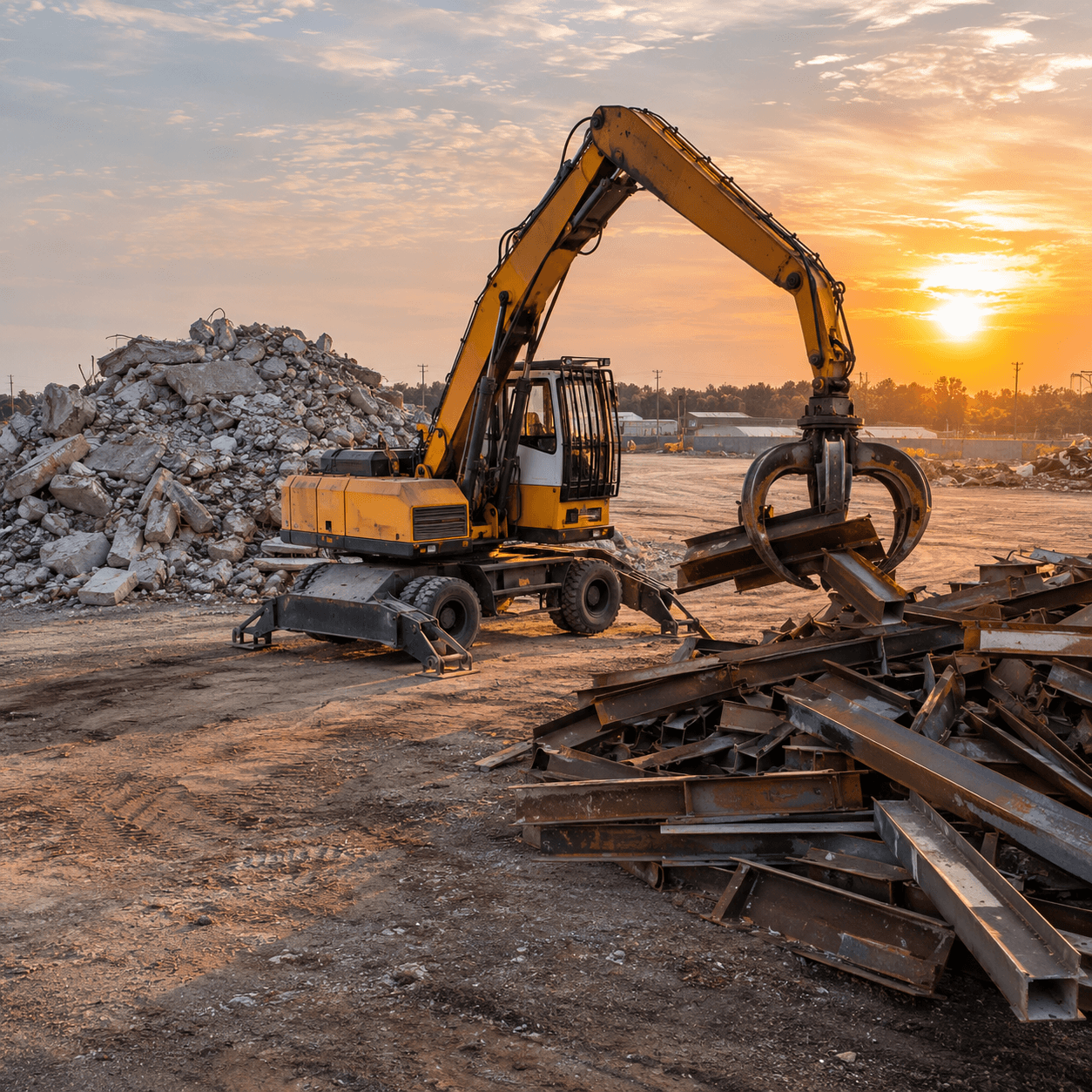
Material handler sorting scrap steel into piles beside crushed concrete on a cleared industrial site.

What Happens to Steel, Equipment, and Concrete After Industrial Demolition

Most of an industrial structure is recyclable material. Structural steel and other metals are sorted and sold as scrap, and concrete is commonly crushed for use as fill or base material. Bella’s crews use material handlers to separate recyclable steel and concrete on site, which reduces hauling. Usable equipment, such as motors, cranes, and tanks, can be sold or relocated when the owner identifies it before work starts.

Scrap and salvage value is addressed in the contract. On many industrial projects the expected scrap value is credited against the demolition price, so an owner should ask how each bid treats it. Materials that cannot be recycled, including regulated waste, go to disposal facilities permitted to accept them. Our guide to demolition material recycling explains how salvage is planned.

What Drives Industrial Demolition Cost and Schedule

Industrial demolition cost depends on the site more than on square footage. The main factors are the size and construction of the structures, the amount of equipment and piping to remove, the hazardous materials that must be abated, the depth of foundations and pits, and how much of the plant must stay in operation. Scrap value works in the owner’s favor, and tight access or live utilities add time. Schedule usually follows the permitting and abatement work, because demolition cannot start until surveys, notices, and hazardous material removal are finished. Bella completes a site analysis and project plan before committing to a schedule. For pricing methods on commercial structures, see the demolition cost guide.

Why Plant Owners and General Contractors Hire Bella for Industrial Demolition

Bella Contracting Services gives industrial owners one contractor for the demolition and the rebuild. Bella is also a general contractor and commercial construction company, so a project can move from demolition through new construction under one contract. Ben Raabe, CEO, leads the company and brings more than 25 years of experience.

Public and federally funded projects carry their own requirements. Bella is Davis-Bacon Act compliant, and its crews have direct experience with prevailing wage contracts and Project Labor Agreements. Every Bella project is managed by a dedicated on-site safety manager for the full duration of the work. Bella is fully insured, and certificates of insurance are available to owners and general contractors on request.

Bella serves industrial clients nationwide, with service across New Jersey, New York, Connecticut, Pennsylvania, Maryland, Illinois, Ohio, Kentucky, Texas, Michigan, and the District of Columbia. To discuss a project, call (855) 368-3366 or use the button below.

Demolition Services That Connect to Industrial Work

Industrial demolition is one part of Bella’s full demolition services for commercial, industrial, and government clients. Office, retail, and institutional structures are covered under commercial building demolition. For a plain-language overview of how structures are taken down, read about general demolition methods.

Industrial Demolition Questions From Plant Owners and Contractors

What is industrial demolition?

Industrial demolition is the planned dismantling and removal of industrial facilities, such as manufacturing plants, factories, mills, warehouses, and power or process plants, together with the equipment inside them. Industrial demolition differs from standard building demolition because the structures contain tanks, piping, machinery, and heavy foundations that must be emptied, isolated, and removed in sequence. Federal rules require an engineering survey, control of utility lines, and the testing and purging of pipes and tanks where hazardous substances are apparent or suspected, before demolition starts. A project can cover one building on an active site or an entire plant closure.

What must be done with tanks, pipes, and process equipment before industrial demolition?

Tanks, pipes, and process equipment must be checked for hazardous contents before demolition starts, and tested and purged wherever those contents are apparent or suspected. OSHA’s demolition standard, 29 CFR 1926.850(e), requires a determination of whether hazardous chemicals, gases, explosives, or flammable materials were used in any pipes, tanks, or other equipment on the property. Where such substances are apparent or suspected, testing and purging must be performed and the hazard eliminated first. Utilities serving the structure must also be shut off, capped, or otherwise controlled outside the building line before work begins.

Can part of a plant stay in operation during industrial demolition?

Part of a plant can stay in operation during industrial demolition when the work is phased and the active areas are separated from the demolition zone. The plan identifies which structures come down first, how people and vehicles move around the work area, and which utilities must stay live. OSHA’s demolition standard, 29 CFR 1926.850(d), requires that any power, water, or other utilities kept in service during demolition be temporarily relocated as necessary and protected. Owners should share production schedules and shutdown windows early so the sequence can be built around them.

Who gets the scrap value from an industrial demolition project?

Scrap value from an industrial demolition project goes to whichever party the contract names. On many industrial projects the contractor takes ownership of the scrap steel and other metals and credits the expected value against the demolition price, which lowers the owner’s cost. Other contracts return the scrap proceeds to the owner. Because metal prices change, owners should ask each bidder how scrap and salvageable equipment are valued in the bid and who carries the price risk. Equipment the owner wants to keep or sell should be listed before work starts.

What drives the cost of an industrial demolition project?

The cost of an industrial demolition project is driven by the size and construction of the structures, the equipment and piping to be removed, the hazardous materials to be abated, and the depth of foundations and pits. Access limits, live utilities, and the need to keep part of a plant running add time and cost, while scrap value offsets part of the price. Permit, survey, and disposal requirements also vary by state and city. Contractors price industrial work from a site visit, drawings, and any survey reports, so two plants of the same size can carry very different prices.

What should a plant owner verify before hiring an industrial demolition contractor?

A plant owner should verify an industrial demolition contractor’s experience with similar facilities, insurance, safety planning, and approach to hazardous materials. Useful requests include certificates of insurance, a description of how the engineering survey and purging requirements will be met, and references from comparable plant or warehouse projects. Owners should also ask who handles permits, abatement coordination, and site cleanup, and whether the price accounts for scrap value. Bella Contracting Services reviews industrial demolition scopes nationwide. To send a project for review, call (855) 368-3366 or select GET A FREE ESTIMATE.

Still Have Questions?

Our team is here to answer all your questions and provide expert guidance for your project. Let’s talk!

Get a Quote Within 24 hours!​

Our team of construction & demolition professionals are always happy to speak with you and value your business. We are trained to handle any requests that you may have.

New Website Lead

Get a Quote Within 24 hours!​

Our team of construction & demolition professionals are always happy to speak with you and value your business. We are trained to handle any requests that you may have.

New Website Lead