24/7 EMERGENCY SERVICE
By Ben Raabe, CEO — Licensed Contractor | 25+ Years Experience
Interior demolition is the removal of a building’s interior finishes, partitions, ceilings, and building systems while the structural frame and exterior envelope stay in place. Bella Contracting Services works as a commercial interior demolition contractor for general contractors, property owners, and developers nationwide, handling everything from a soft strip of finishes and fixtures to a full gut-out back to the shell. Every interior scope starts with a hazardous materials survey, and crews work inside occupied buildings with dust, noise, and debris controls in place. Once the space is clear, Bella can carry the project into the rebuild under one contract.
Get a Free Interior Demolition Estimate
Fully insured and available 24/7. We typically respond to project inquiries within one business day.
By submitting this form, you consent to be contacted by Bella Demolition and Contracting Services via phone, email, or text regarding your project inquiry. We respect your privacy and will never share your information.
View our Privacy Policy.
Commercial interior demolition runs at three depths, and the depth sets the crew size, equipment, schedule, and what has to be protected. Bella Contracting Services performs all three, from a finishes-only strip on a single floor to a complete gut of a commercial building.
A soft strip removes finishes, fixtures, and non-structural systems: flooring, ceiling grid and tile, drywall partitions, millwork, doors, and mechanical, electrical, and plumbing (MEP) components. The structure is left untouched. A soft strip is the typical scope for an office turnover or a retail white-box, where the landlord needs a clean space ready for the next tenant’s build-out.
Structural interior demolition goes past the finishes into load-bearing elements, such as removing a bearing wall to open up a floor plate or cutting through a floor for a new stair or shaft. Bella performs load-bearing wall removal with engineered temporary support, so the structure stays carried while those elements come out. This is the scope where licensed oversight matters most, because a mistake affects the whole building rather than one room.
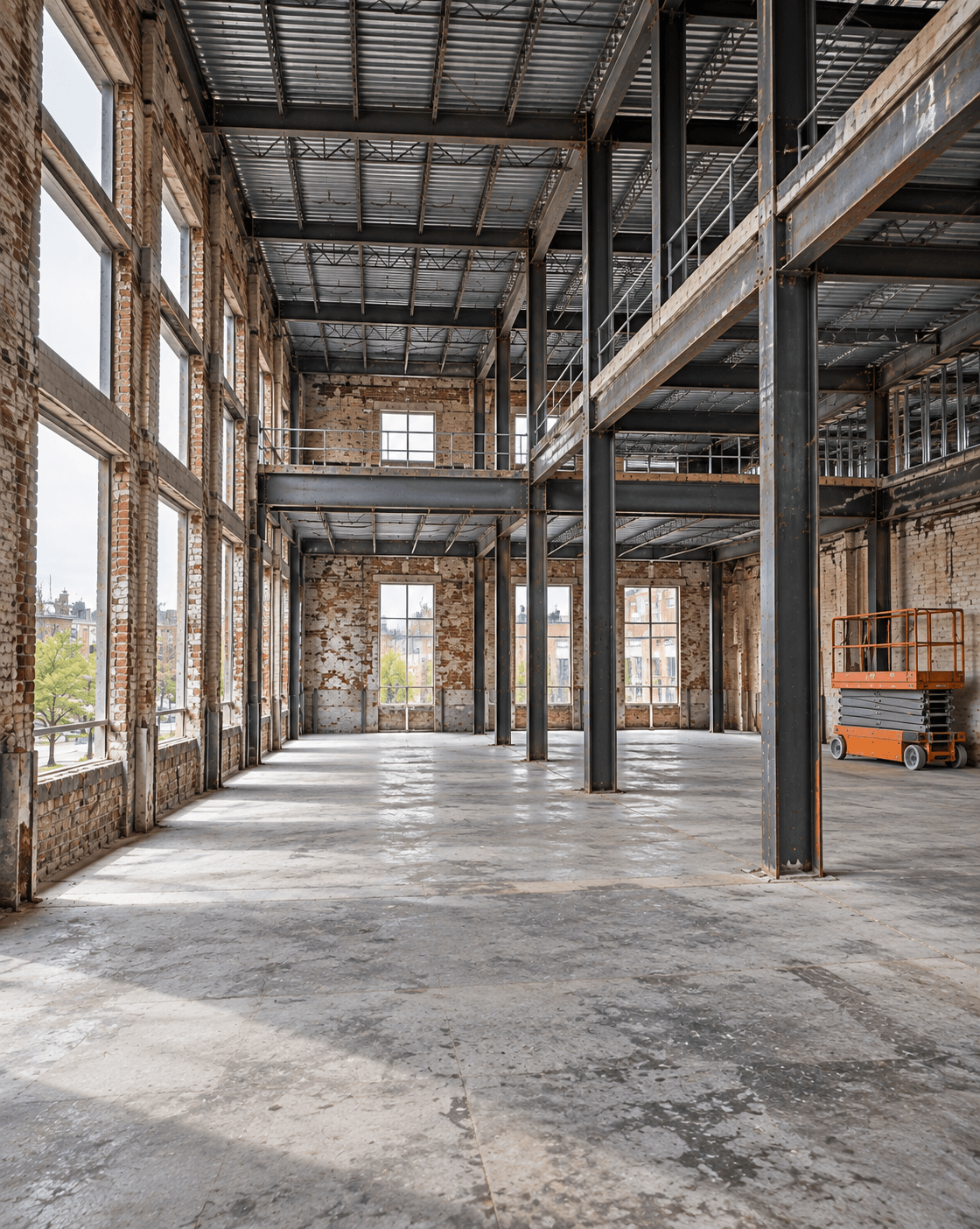
A full gut removes everything inside the envelope down to the structure: partitions, ceilings, flooring, and MEP systems that are not being reused, leaving an open shell for a complete rebuild. Full gut-outs are common ahead of adaptive reuse, where an office, warehouse, or institutional building is converted to a new use, and on gut rehabilitation of commercial buildings ahead of tenant improvement work.
Interior demolition, selective demolition, and structural demolition overlap, and contractors use the terms loosely. In general industry usage, interior demolition describes work confined inside the building envelope. Selective demolition is broader: it means removing specific components, inside or outside, while the rest of the building stays intact and often in use, so most interior projects are also selective. Structural demolition addresses the load-bearing systems of a building, such as concrete frames, steel superstructures, foundations, and footings, up to taking the entire structure down.
The distinction matters when comparing bids, because two quotes for “interior demolition” can describe very different depths of work. Bella’s commercial demolition contractors handle all three categories, so a project that starts as an interior strip and uncovers a structural problem does not have to change contractors midstream.
Federal rules put the inspection ahead of the demolition. Under the EPA asbestos standard at 40 CFR 61.145, the owner or operator of a demolition or renovation must thoroughly inspect the affected part of the facility for asbestos before work begins, including nonfriable material. When a renovation will disturb regulated asbestos-containing material at or above the rule’s thresholds (260 linear feet on pipes, 160 square feet on other facility components, or 35 cubic feet where the length or area could not be measured beforehand), written notice must be filed at least 10 working days before asbestos stripping or removal work, or any other activity that would disturb the material, begins. Removing a load-supporting structural member makes the work a demolition under the rule, and a demolition requires advance written notice even when the regulated material is below those thresholds, unless a government agency has ordered the demolition because the building is structurally unsound and in danger of imminent collapse.
Bella Contracting Services begins every interior demolition scope with a survey for hazardous materials, including asbestos-containing materials, lead-based paint, and PCB-containing caulks, so remediation is complete before demolition crews start. Ceiling tiles, floor tiles, pipe insulation, and ductwork are common places asbestos turns up in older interiors, which is why the survey comes before the first wall opens. How that material is handled once it is found is covered in Bella’s overview of asbestos control methods.
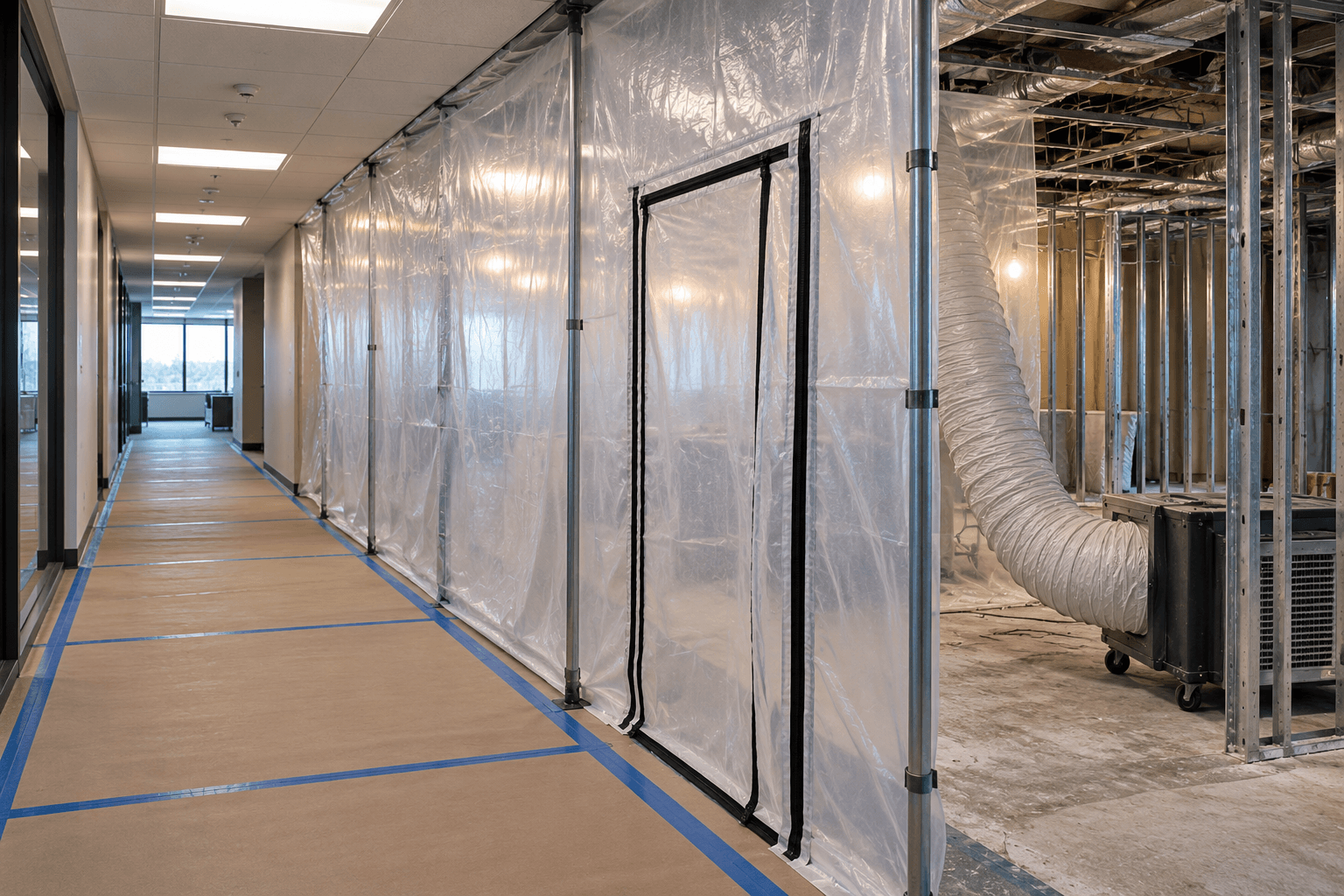
Interior demolition often happens in buildings that stay open: an office floor between occupied floors, a healthcare wing next to active departments, or a storefront in an operating shopping center. Bella Contracting Services works within occupied structures, alongside active tenants and on tight schedules. Crews minimize dust production, reduce noise, and contain demolition debris so the rest of the building can keep working.
Where vibration or dust has to stay at a minimum, Bella uses manual strategic dismantling in place of mechanical demolition. It is slower and more deliberate, and it has a far smaller impact on the spaces next door. Healthcare and laboratory interiors add containment protocols on top of that. In New York City buildings, the logistics also include after-hours scheduling, freight elevator coordination, and strict adherence to building management protocols, which Bella’s New York City demolition crews already manage. The techniques behind the containment are explained in Bella’s article on dust and noise control.
Interior demolition is usually the first trade on a renovation schedule, so any delay in the strip pushes every trade behind it. Bella Contracting Services performs interior and selective demolition on tenant improvement projects, healthcare facility renovations, school and university upgrades, government building reconfigurations, and retail white-boxing. On adaptive reuse projects, the interior strip is what makes the conversion possible.
Because Bella is also a full-service general contractor, the company that clears the space can build it back. Bella’s general contracting team takes projects from demolition through new construction under one contract, and Bella holds NY Commercial General Contractor License #624832 with unrestricted height clearance for demolition, concrete, and general construction. For owners and general contractors, that means one schedule and one point of accountability from strip-out to turnover.
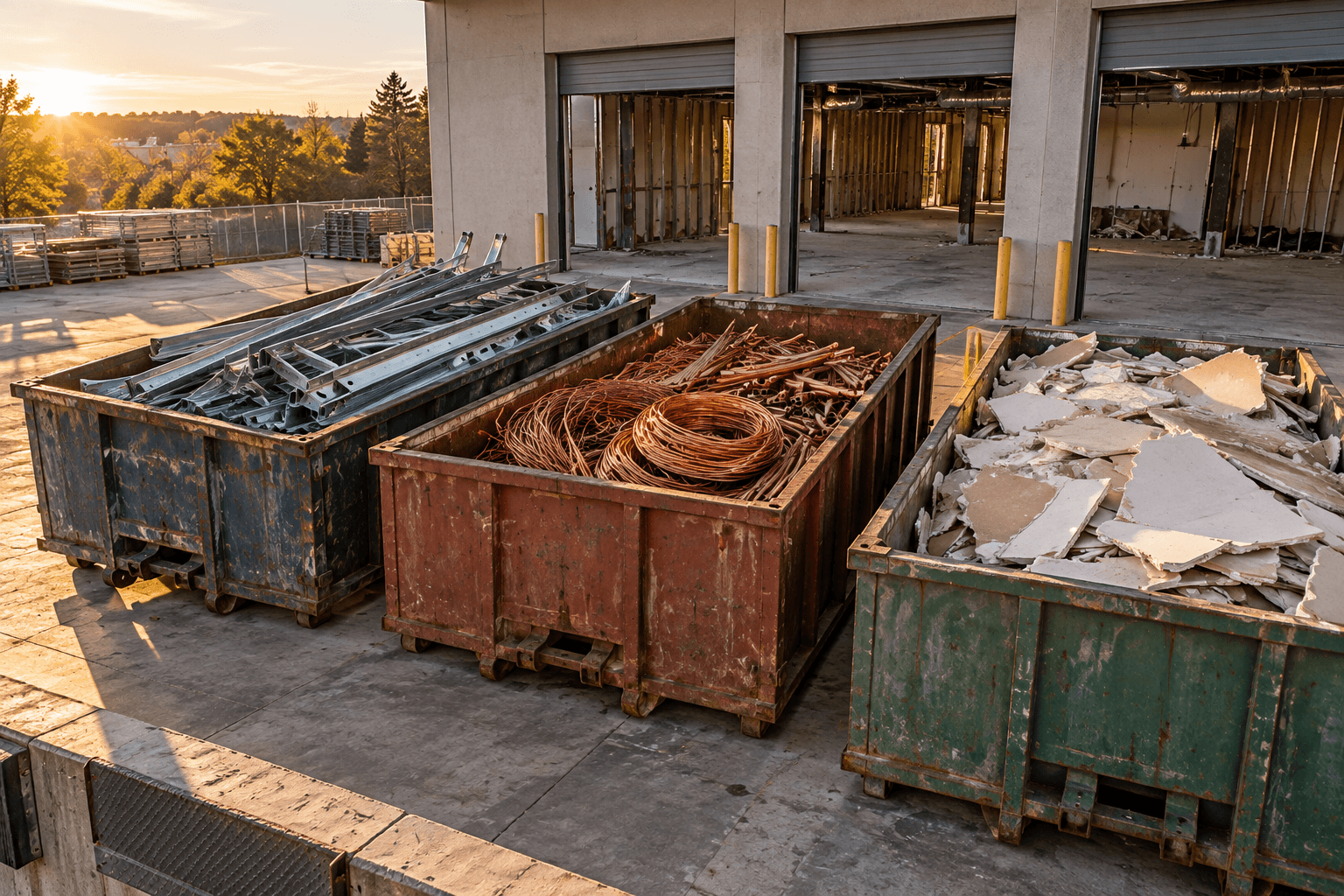
Interior demolition produces a steady stream of mixed debris, and how it leaves the building affects the schedule as much as the demolition itself. Bella Contracting Services handles debris removal, recycling, and hazardous material disposal as part of the work, then hands the space back ready for its next use.
Where material recovery is a project priority, recovered materials such as steel, copper, aluminum, and lumber are sorted and directed to recycling facilities or material resale partners. That reduces landfill volume and often qualifies for LEED credits on the redevelopment. Bella’s overview of material recycling explains which demolition materials are most commonly recovered.
Interior demolition cost depends far more on scope and site conditions than on square footage alone. Across the industry, the biggest price drivers are the depth of the strip (a finishes-only soft strip versus a full gut or structural removal), what the hazardous materials survey finds, since abatement is typically priced and scheduled as its own line item, and occupancy constraints such as after-hours shifts, phased work, and containment.
Building access matters too, including the floor level, freight elevator availability, and loading dock time, along with debris volume and any engineering or temporary shoring needed for structural work. Bella prices each interior scope after an on-site assessment rather than from a per-square-foot table. For whole-building teardown figures, Bella publishes market ranges on its commercial demolition costs page.
Bella Contracting Services takes on commercial interior demolition across its service footprint: New Jersey, New York, Connecticut, Pennsylvania, Maryland, Illinois, Ohio, Kentucky, Texas, Michigan, and the District of Columbia, along with national commercial projects across the United States. Owners and general contractors with work in the company’s home state can start with Bella’s New Jersey demolition team, and every demolition scope Bella performs, from structural teardowns to emergency response, is listed on its demolition services hub.
General contractors hire an interior demolition subcontractor to protect the schedule, and Bella Contracting Services is built for that role. The company is licensed and fully insured, holds NY Commercial General Contractor License #624832, and has experience on union, federal, and prevailing wage work, including Davis-Bacon Act and Project Labor Agreement projects. Bella’s chief executive, Ben Raabe, is a licensed contractor with more than 25 years of experience.
Bella prices every interior scope from an on-site assessment. To scope an interior demolition project, request a free estimate below.
Commercial interior demolition includes removing a building’s non-structural interior elements, such as flooring, ceilings, drywall partitions, millwork, fixtures, and mechanical, electrical, and plumbing systems, and on some projects load-bearing walls with engineered temporary support. The depth ranges from a soft strip of finishes to a full gut back to the structural shell. Bella performs soft strips, structural interior demolition, and full gut-outs for commercial, industrial, and institutional buildings, and starts each scope with a hazardous materials survey so any remediation is finished before demolition begins.
Interior demolition refers to work confined inside a building’s envelope, while selective demolition refers to removing specific components of a building, inside or outside, while the rest stays intact and often in use. Most interior demolition projects are therefore a form of selective demolition, but selective work can also include exterior elements such as a facade section. Structural demolition is a third category that removes load-bearing framing, foundations, or an entire building. Bella performs all three, which lets a project change scope without changing contractors.
Yes. Interior demolition is regularly performed in buildings that stay open, including office buildings, healthcare facilities, and retail centers. Bella works within occupied structures alongside active tenants, and its crews minimize dust production, reduce noise, and contain demolition debris to limit the impact on adjacent spaces. Where vibration or dust must stay at a minimum, crews use manual strategic dismantling in place of mechanical methods, and healthcare and laboratory interiors add containment protocols. In New York City buildings, Bella also coordinates after-hours scheduling, freight elevator use, and building management requirements.
For commercial, institutional, industrial, and public buildings, yes. The federal asbestos standard at 40 CFR 61.145 requires the owner or operator of a demolition or renovation to thoroughly inspect the affected part of the facility for asbestos before work begins. Notice must be filed at least 10 working days before asbestos removal or other disturbing activity begins whenever a renovation will disturb regulated material at or above the rule’s thresholds, and for any demolition not ordered by a government agency because the building is structurally unsound. Bella begins every interior demolition scope with a hazardous materials survey covering asbestos, lead-based paint, and PCB-containing caulks, and completes remediation before demolition crews start.
Interior demolition cost depends mainly on the depth of the strip, from a finishes-only soft strip to a full gut or structural removal, and on what the hazardous materials survey finds, since abatement is typically priced and scheduled as its own line item. Occupancy constraints such as after-hours shifts, phased work, and containment, along with building access, debris volume, and any engineering for structural work, also move the price. Bella prices each interior scope after an on-site assessment rather than from a per-square-foot table.
Bella focuses on commercial, industrial, and institutional interior demolition, and also accepts select residential projects on a case-by-case basis. Residential requests, such as a full interior gut ahead of a home renovation, are reviewed individually to confirm the scope fits Bella’s schedule and crews. Homeowners, property owners, and general contractors can call (855) 368-3366 or use the GET A FREE ESTIMATE button on this page to describe the project and request a free estimate.
Still Have Questions?
Our team is here to answer all your questions and provide expert guidance for your project. Let’s talk!